Running more-or-less alongside the most remote section of the New England Highway, through the Northern Tablelands region of NSW, can be found the remnants of a once-proud train line. The Great Northern Railway, as it was known in its heyday, provided the only railway service linking Sydney and Brisbane, between 1889 and 1930. Regular passenger services continued until 1972, and the line has been completely closed since 1988.
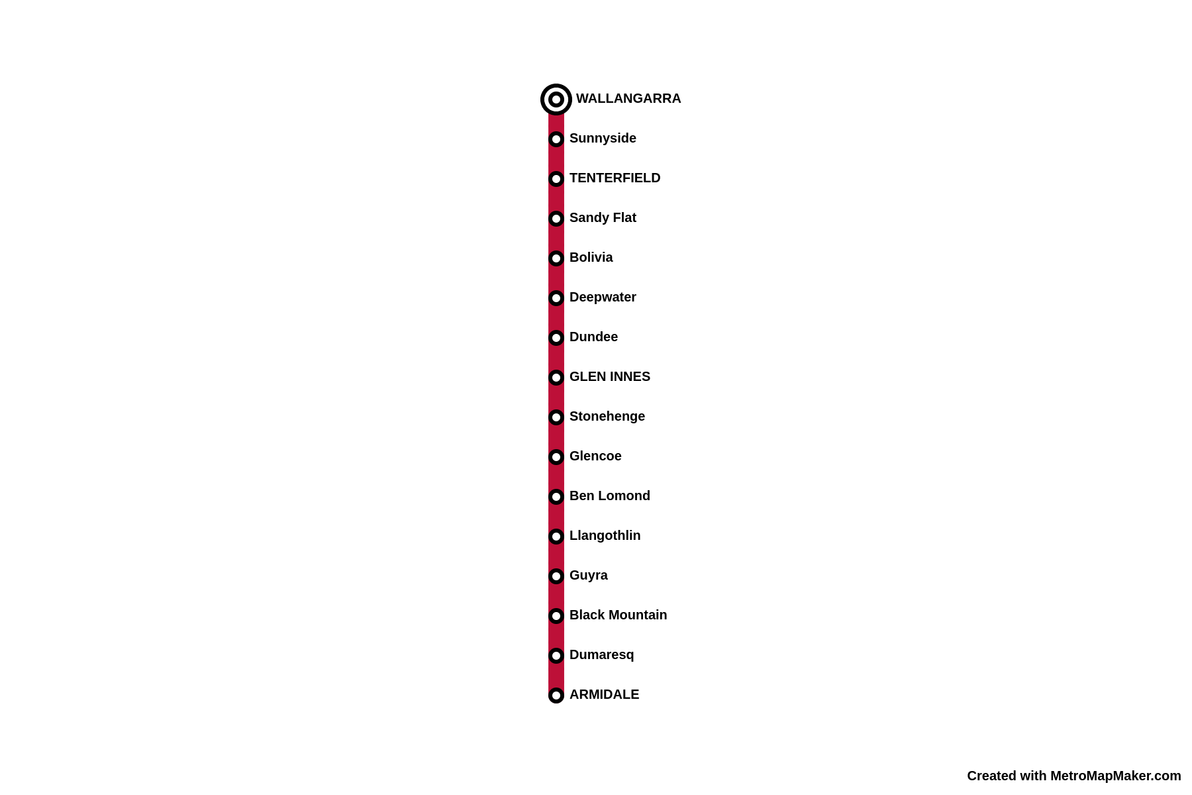
Metro map style illustration of the old Armidale to Wallangarra passenger service Thanks to:Metro Map Maker
Although I once drove through most of the Northern Tablelands, I wasn't aware of this railway, nor of its sad recent history, at the time. I just stumbled across it a few days ago, browsing maps online. I decided to pen this here wee thought, mainly because I was surprised at how scant information there is about the old line and its stations.
The Eiffel Tower, as it turns out, is far more than just the most iconic tourist attraction in the world. As the tallest structure ever built by man at the time – and holder of the record "tallest man-made structure in the world" for 41 years, following its completion in 1889 – it was a revolutionary feat of structural engineering. It was also highly controversial – deeply unpopular, one might even say – with some of the most prominent Parisians of the day fiercely protesting against its "monstruous" form. And Gustave Eiffel, its creator, was brilliant, ambitious, eccentric, and thick-skinned.
From reading the wonderful epic novel Paris, by Edward Rutherford, I learned some facts about Gustave Eiffel's life, and about the Eiffel Tower's original conception, its construction, and its first few decades as the exclamation mark of the Paris skyline, that both surprised and intrigued me. Allow me to share these tidbits of history in this here humble article.
Communism – or, to be more precise, Marxism – made sweeping promises of a rosy utopian world society: all people are equal; from each according to his ability, to each according to his need; the end of the bourgeoisie, the rise of the proletariat; and the end of poverty. In reality, the nature of the communist societies that emerged during the 20th century was far from this grandiose vision.
Communism obviously was not successful in terms of the most obvious measure: namely, its own longevity. The world's first and its longest-lived communist regime, the Soviet Union, well and truly collapsed. The world's most populous country, the People's Republic of China, is stronger than ever, but effectively remains communist in name only (as does its southern neighbour, Vietnam).
However, this article does not seek to measure communism's success based on the survival rate of particular governments; nor does it seek to analyse (in any great detail) why particular regimes failed (and there's no shortage of other articles that do analyse just that). More important than whether the regimes themselves prospered or met their demise, is their legacy and their long-term impact on the societies that they presided over. So, how successful was the communism experiment, in actually improving the economic, political, and cultural conditions of the populations that experienced it?
The infamous East India Company, "the Company that Owned a Nation", is remembered harshly by history. And rightly so. On the whole, it was an exploitative venture, and the British individuals involved with it were ruthless opportunists. The Company's actions directly resulted in the impoverishment, the subjugation, and in several instances the death of countless citizens of the Indian Subcontinent.
Company rule, and the subsequent rule of the British Raj, are also acknowledged as contributing positively to the shaping of Modern India, having introduced the English language, built the railways, and established political and military unity. But these are overshadowed by its legacy of corporate greed and wholesale plunder, which continues to haunt the region to this day.
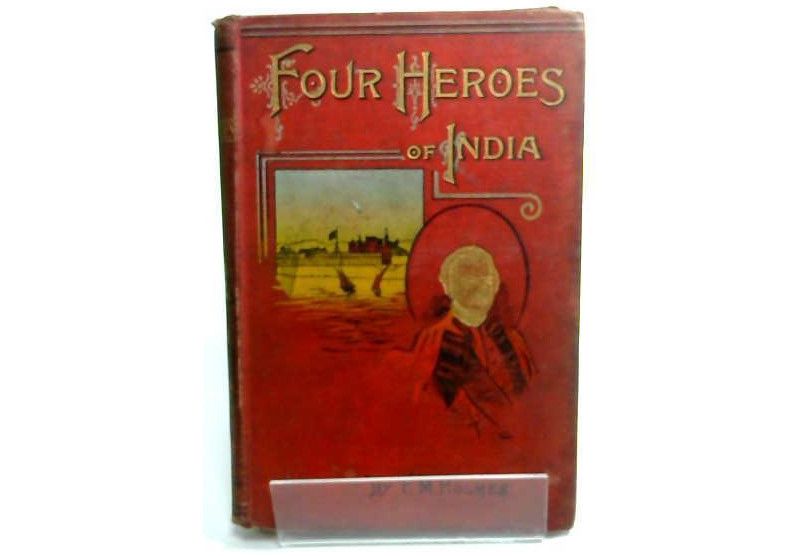
I recently read Four Heroes of India (1898), by F.M. Holmes, an antique book that paints a rose-coloured picture of Company (and later British Government) rule on the Subcontinent. To the modern reader, the book is so incredibly biased in favour of British colonialism that it would be hilarious, were it not so alarming. Holmes's four heroes were notable military and government figures of 18th and 19th century British India.
Clive, Hastings, Havelock, Lawrence; with a Concluding Note on the Rule of Lord Mayo. Image source:eBay.
I'd like to present here four alternative heroes: men (yes, sorry, still all men!) who in my opinion represented the British far more nobly, and who left a far more worthwhile legacy in India. All four of these figures were founders or early members of The Asiatic Society (of Bengal), and all were pioneering academics who contributed to linguistics, science, and literature in the context of South Asian studies.
The treatment of Aboriginal Australians in colonial times was generally atrocious. This is now well known and accepted by most. Until well into the 20th century, Aborigines were subjected to exploitation, abuse, and cold-blooded murder. They were regarded as sub-human, and they were not recognised at all as the traditional owners of their lands. For a long time, virtually no serious attempts were made to study or to understand their customs, their beliefs, and their languages. On the contrary, the focus was on "civilising" them by imposing upon them a European way of life, while their own lifestyle was held in contempt as "savage".
I recently came across a gem of literary work, from the early days of New South Wales: The Present State of Australia, by Robert Dawson. The author spent several years (1826-1828) living in the Port Stephens area (about 200km north of Sydney), as chief agent of the Australian Agricultural Company, where he was tasked with establishing a grazing property. During his time there, Dawson lived side-by-side with the Worimi indigenous peoples, and Worimi anecdotes form a significant part of his book (which, officially, is focused on practical advice for British people considering migration to the Australian frontier).
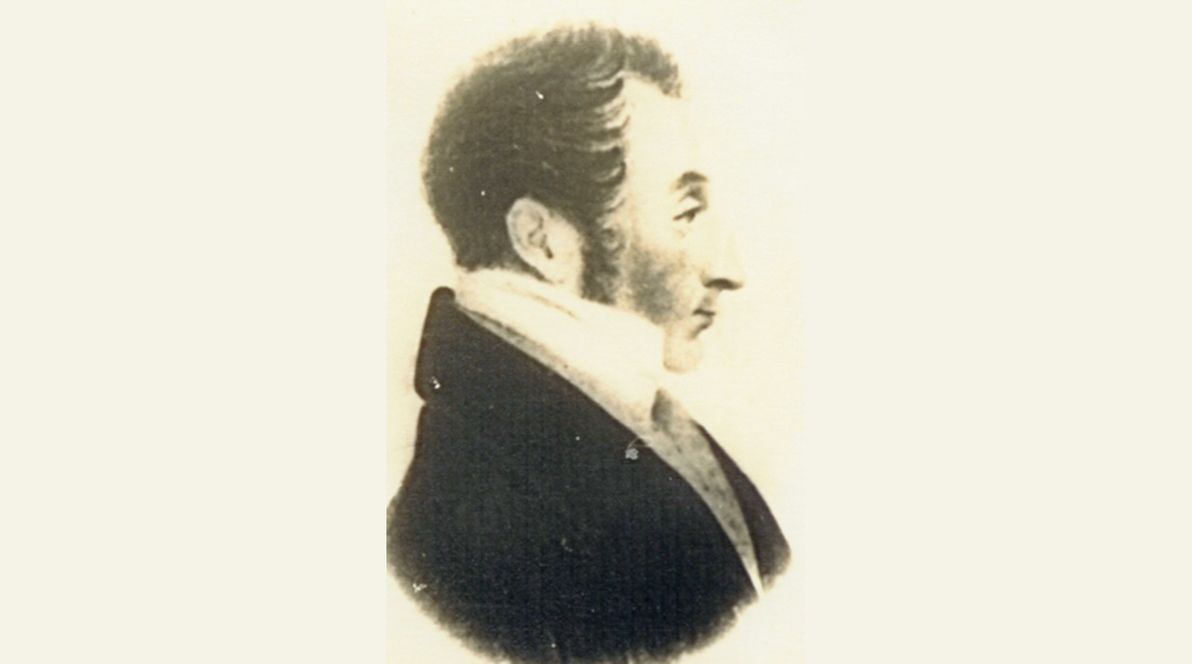
Robert Dawson of the Australian Agricultural Company. Image source:Wikimedia Commons.
In this article, I'd like to share quite a number of quotes from Dawson's book, which in my opinion may well constitute the oldest known (albeit informal) anthropological study of Indigenous Australians. Considering his rich account of Aboriginal tribal life, I find it surprising that Dawson seems to have been largely forgotten by the history books, and that The Present State of Australia has never been re-published since its first edition in 1830 (the copies produced in 1987 are just fascimiles of the original). I hope that this article serves as a tribute to someone who was an exemplary exception to what was then the norm.
In classical antiquity, a number of advanced civilisations flourished in the area that today comprises parts of Turkmenistan, Uzbekistan, Tajikistan, and Afghanistan. Through this area runs a river most commonly known by its Persian name, as the Amu Darya. However, in antiquity it was known by its Greek name, as the Oxus (and in the interests of avoiding anachronism, I will be referring to it as the Oxus in this article).
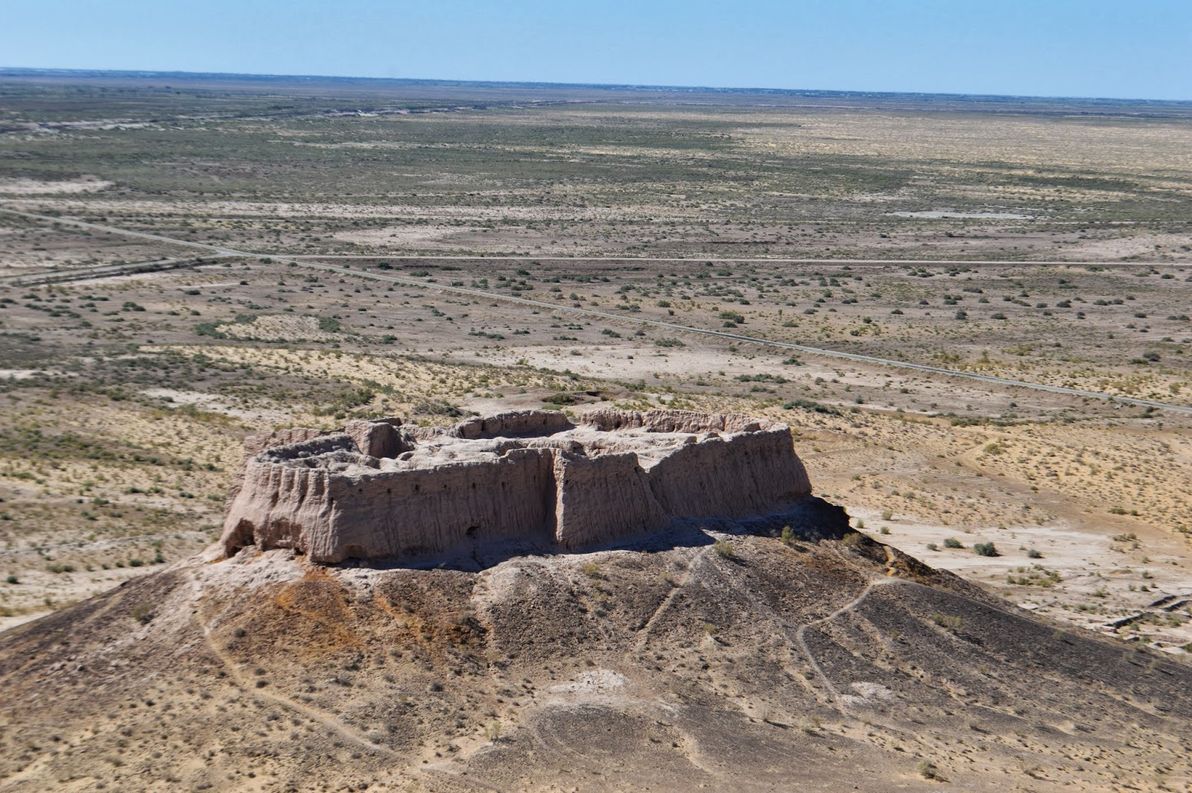
The Oxus region is home to archaeological relics of grand civilisations, most notably of ancient Bactria, but also of Chorasmia, Sogdiana, Margiana, and Hyrcania. However, most of these ruined sites enjoy far less fame, and are far less well-studied, than comparable relics in other parts of the world.
I recently watched an excellent documentary series called Alexander's Lost World, which investigates the history of the Oxus region in-depth, focusing particularly on the areas that Alexander the Great conquered as part of his legendary military campaign. I was blown away by the gorgeous scenery, the vibrant cultural legacy, and the once-majestic ruins that the series featured. But, more than anything, I was surprised and dismayed at the extent to which most of the ruins have been neglected by the modern world – largely due to the region's turbulent history of late.
This article has essentially the same aim as that of the documentary: to shed more light on the ancient cities and fortresses along the Oxus and nearby rivers; to get an impression of the cultures that thrived there in a bygone era; and to explore the climate change and the other forces that have dramatically affected the region between then and now.
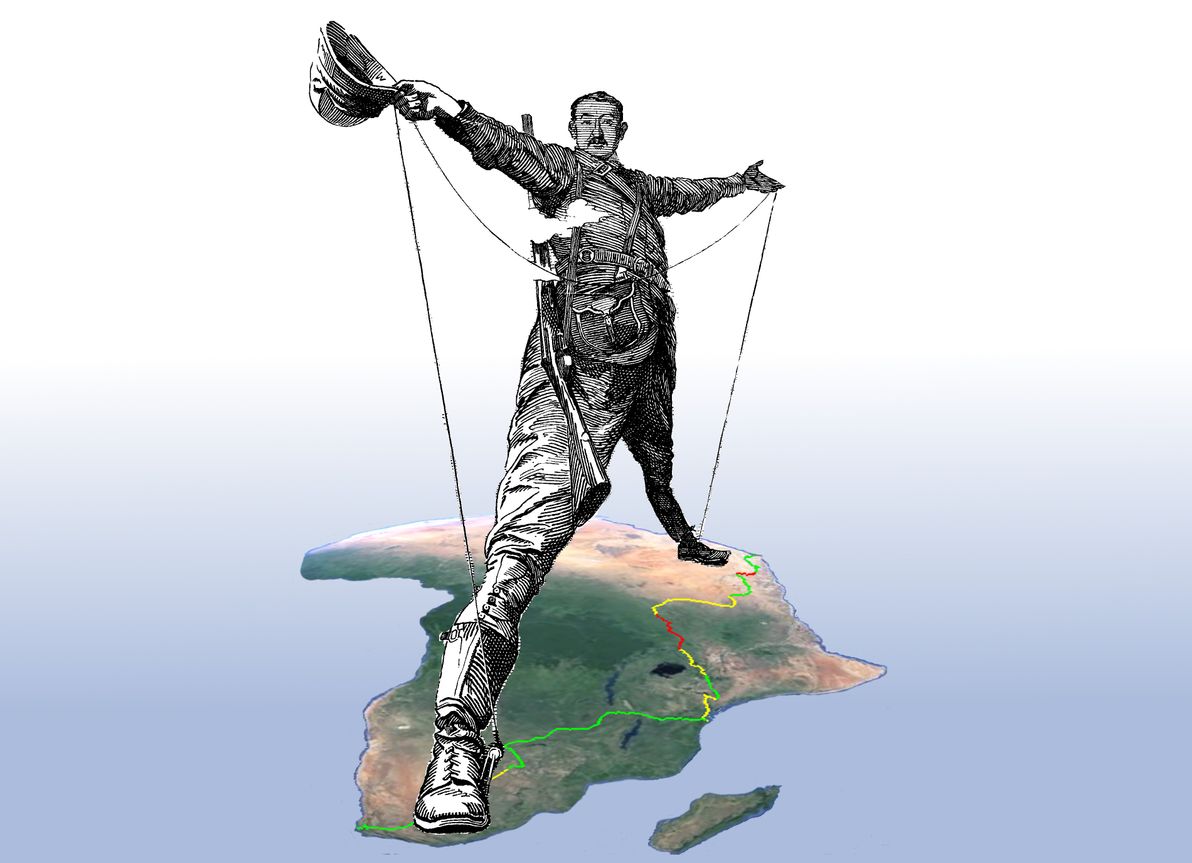
In the late 19th century, the British-South-African personality Cecil Rhodes dreamed of a complete, uninterrupted railway stretching from Cape Town, South Africa, all the way to Cairo, Egypt. During Rhodes's lifetime, the railway extended as far north as modern-day Zimbabwe – which was in that era known by its colonial name Rhodesia (in honour of Rhodes, whose statesmanship and entrepreneurism made its founding possible). A railway traversing the entire north-south length of Africa was an ambitious dream, for an ambitious man.
Rhodes's dream remains unfulfilled to this day.
The famous "Rhodes Colossus", superimposed upon the present-day route of the Cape to Cairo Railway. "The Rhodes Colossus" illustration originally from Punch magazine, Vol. 103, 10 Dec 1892; image courtesy of Wikimedia Commons. Africa satellite image courtesy of Google Earth.
Nevertheless, significant additions have been made to Africa's rail network during the interluding century; and, in fact, only a surprisingly small section of the Cape to Cairo route remains bereft of the Iron Horse's footprint.
Although both information about – (a) the historical Cape to Cairo dream; and (b) the history / current state of the route's various railway segments – abound, I was unable to find any comprehensive study of the current state of the railway in its entirety.
This article, therefore, is an endeavour to examine the current state of the full Cape to Cairo Railway. As part of this study, I've prepared a detailed map of the route, which marks in-service sections, abandoned sections, and missing sections. The map has been generated from a series of KML files, which I've made publicly available on GitHub, and for which I welcome contributions in the form of corrections / tweaks to the route.
In this article, I'm going to solve all the monetary problems of the modern world.
Oh, you think that's funny? I'm being serious.
Alright, then. I'm going to try and solve them. Money is a concept, a product and a system that's been undergoing constant refinement since the dawn of civilisation; and, as the world's current financial woes are testament to, it's clear that we still haven't gotten it quite right. That's because getting financial systems right is hard. If it were easy, we'd have done it already.
I'm going to start with some background, discussing the basics such as: what is money, and where does it come from? What is credit? What's the history of money, and of credit? How do central banks operate? How do modern currencies attain value? And then I'm going to move on to the fun stuff: what can we do to improve the system? What's the next step in the ongoing evolution of money and finance?
Disclaimer: I am not an economist or a banker; I have no formal education in economics or finance; and I have no work experience in these fields. I'm just a regular bloke, who's been thinking about these big issues, and reading up on a lot of material, and who would like to share his understandings and his conclusions with the world.
For the past few weeks, the world's gaze has focused on Syria, a nation currently in the grip of civil war. There has been much talk about the heavy foreign involvement in the conflict — both of who's been fuelling the fire of rebel aggression, and of who's been defending the regime against global sanctions and condemnation. While it has genuine grassroots origins – and while giving any one label to it (i.e. to an extremely complex situation) would be a gross over-simplification — many have described the conflict as a proxy war involving numerous external powers.
Foreign intervention is nothing new in Syria, which is the heart of one of the most ancient civilised regions in the world. Whether it be Syria's intervention in the affairs of others, or the intervention of others in the affairs of Syria – both of the above have been going on unabated for thousands of years. With an alternating role throughout history as either a World Power in its own right, or as a point of significance to other World Powers (with the latter being more often the case), Syria could be described as a serious "mover and shaken" kind of place.
This article examines, over the ages, the role of the land that is modern-day Syria (which, for convenience's sake and at the expense of anachronism, I will continue to refer to as "Syria"), in light of this theme. It is my endeavour that by exploring the history of Syria in this way, I am able to highlight the deep roots of "being influential" versus "being influenced by" – a game that Syria has been playing expertly for millennia – and that ultimately, I manage to inform readers from a new angle, regarding the current tragic events that are occurring there.
According to most linguistic / historical sources, the English language as we know it today is a West Germanic language (the other two languages in this family being German and Dutch). Modern English is the descendant of Old English, and Old English was essentially born when the Anglo-Saxons migrated to the isle of Great Britain in the 5th c. C.E., from their traditional homeland in the north-west of modern Germany. Prior to this time, it's believed that the inhabitants of all parts of the British Isles were predominantly Celtic speakers, with a small Latin influence resulting from the Roman occupation of Britain.
Of the languages that have influenced the development of English over the years, there are three whose effect can be overwhelmingly observed in modern English: French ("Old Norman"), Latin, and Germanic (i.e. "Old English"). But what about Celtic? It's believed that the majority of England's pre-Anglo-Saxon population spoke Brythonic (i.e. British Celtic). It's also been recently asserted that the majority of England's population today is genetically pre-Anglo-Saxon Briton stock. How, then — if those statements are both true — how can it be that the Celtic languages have left next to no legacy on modern English?